Endoscopic Hybrid FaceLift

Endoscopic Hybrid FaceLift
Midface and Periorbital Rejuvenation Without Changing Brow Position
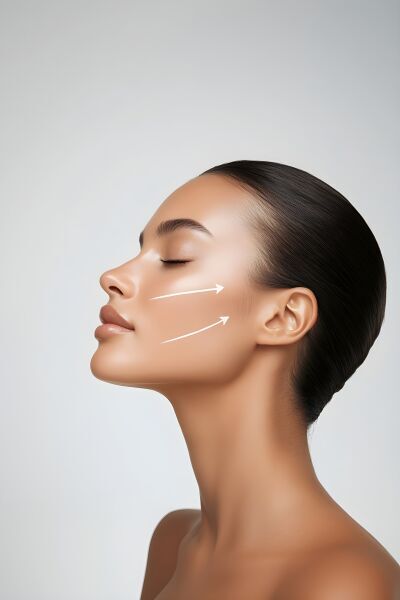
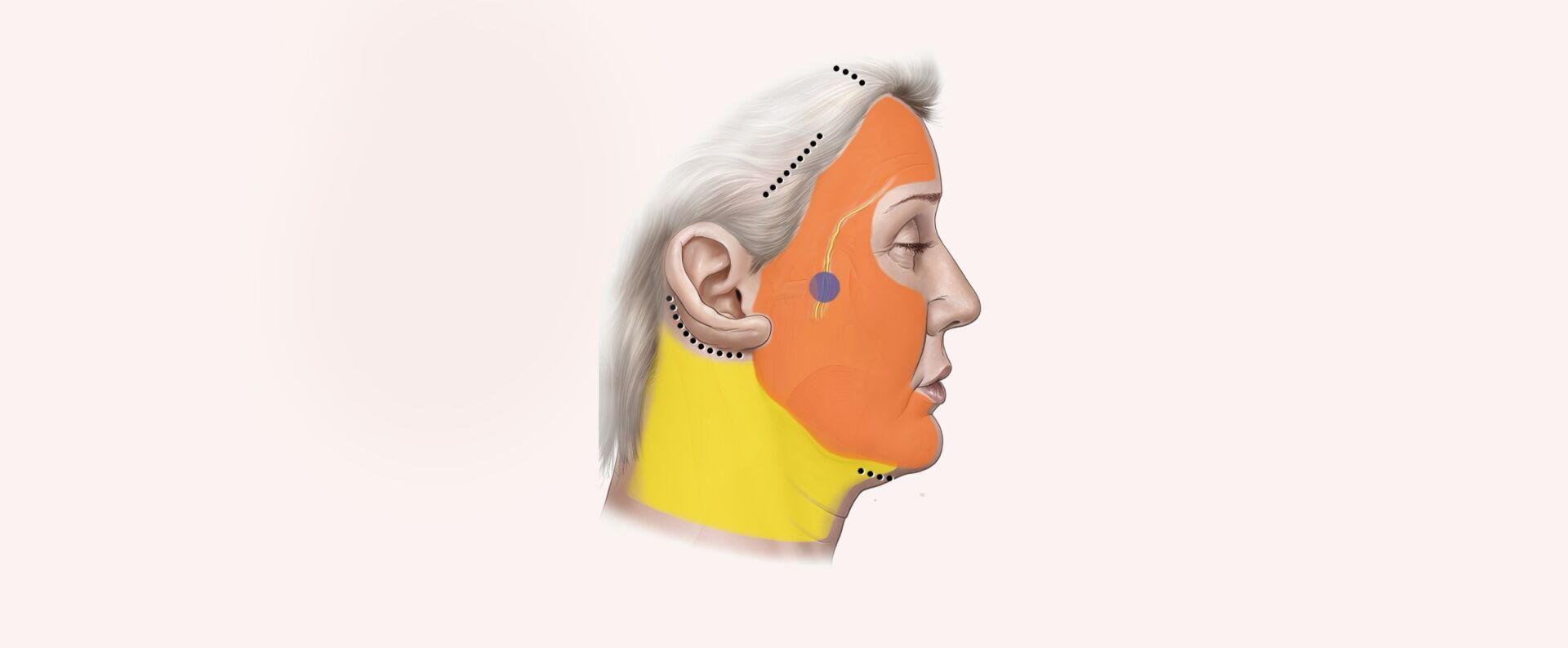
Endoscopic Hybrid Facelift is an advanced facial rejuvenation procedure designed for patients seeking improvement of the eye area, cheeks, midface, and early nasolabial folds without significant brow elevation.
The procedure combines superficial-plane and deep-plane endoscopic dissection techniques to create powerful vertical lifting of the midface and periorbital region while preserving the patient's natural brow position.
For many patients, the goal is not a higher brow. The goal is to look fresher, more rested, and more youthful without changing facial identity or eyebrow shape.
Endoscopic Hybrid Facelift was developed to address this specific need through hidden incisions, endoscopic visualization, and anatomical tissue repositioning.
BEFORE AFTER

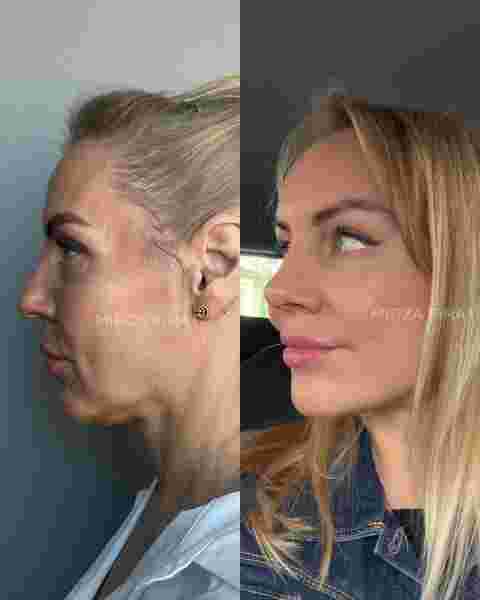


Ideal candidates often experience:
• Tired-looking eyes
• Early midface descent
• Cheek flattening
• Mild nasolabial folds
• Periorbital aging
• Lower eyelid-cheek hollowing
• Early facial aging around the eyes and cheeks
Many patients specifically choose Hybrid Facelift because they want improvement around the eyes and midface without noticeable brow elevation.
Not necessarily.
One of the most common misconceptions in facial rejuvenation is that every patient requires brow elevation.
Many patients already have attractive brow position and brow-to-eye proportions. In these patients, raising the brows further may be unnecessary or even undesirable.
The Hybrid Facelift was specifically developed for patients who wish to improve the eye area and midface while maintaining their natural eyebrow position.
Both procedures improve the upper face and midface.
The primary difference is the brow.
Type I often includes greater brow elevation and upper-face lifting.
Hybrid Facelift focuses more heavily on the periorbital region, cheeks, and midface while preserving the existing brow position whenever possible.
In simple terms:
Type I = Brow Lift + Midface Lift
Hybrid = Midface Lift + Eye Rejuvenation With Minimal Brow Change
Yes.
One of the primary goals of the Hybrid Facelift is rejuvenation of the periorbital region.
By restoring support around the eyes and elevating the midface vertically, the procedure may improve tired-looking eyes, lower eyelid-cheek transitions, and overall eye-area appearance.
Yes.
As the cheeks descend, support to the central face decreases and nasolabial folds become more noticeable.
By elevating the midface vertically and restoring cheek support, Hybrid Facelift may soften the nasolabial region while maintaining natural facial proportions.
Yes.
The Hybrid Facelift combines both superficial-plane and deep-plane techniques.
This dual-plane approach allows the procedure to address multiple anatomical layers simultaneously while maintaining natural movement and facial expression.
Yes.
The procedure is performed through carefully concealed incisions hidden within the hair-bearing scalp and temporal region.
Visible scars are typically minimal and discreetly concealed.
Yes, because the procedure repositions deeper facial structures rather than temporarily masking aging, results are generally long-lasting and measured in years rather than months.
Patients continue to age naturally, but from a more youthful starting point.
Most patients experience temporary swelling, bruising, and tightness during the early recovery period.
Many patients begin feeling socially comfortable within approximately two weeks, although refinement continues as swelling resolves and tissues settle.
The goal is to rejuvenate the eye area, cheeks, and midface while preserving natural brow position, facial identity, and expression.
The procedure is designed for patients who want meaningful facial rejuvenation through hidden incisions, anatomical repositioning, and natural-looking results without appearing operated on or overcorrected.