Endoscopic Facelift Type V
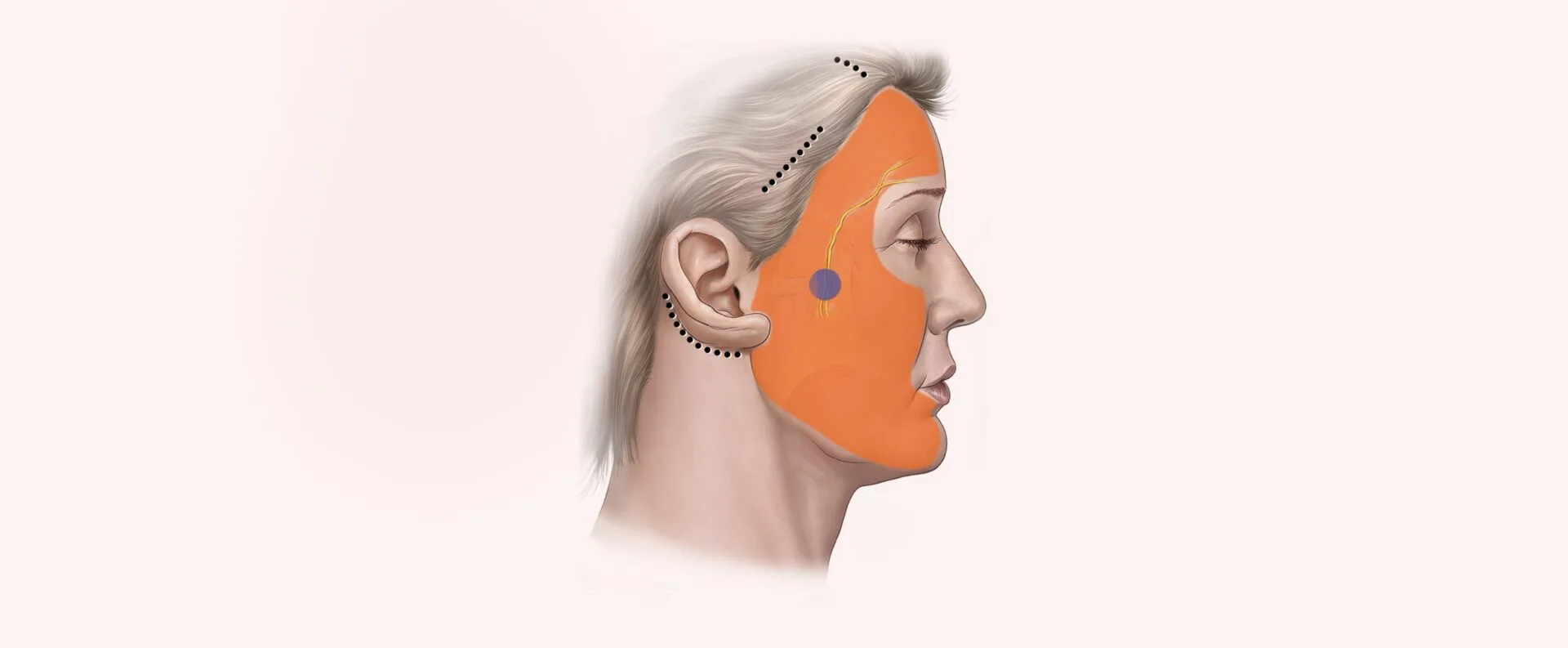

Endoscopic Facelift Type V
Jawline Definition, Jowl Correction & Lower Face Rejuvenation
Endoscopic Deep Plane Facelift Type V is an advanced facial rejuvenation procedure designed for patients whose primary concerns involve the jawline, lower face, marionette lines, and early jowls.
Like all endoscopic facelift procedures developed by Dr. Mirza Fırat, Type V utilizes hidden incisions, endoscopic visualization, deep-plane dissection, retaining ligament release, and anatomical SMAS repositioning to restore youthful facial support while preserving natural facial expression and identity.
Unlike Type I, which focuses primarily on the brow, eyes, cheeks, and midface, Type V extends rejuvenation into the lower face and jawline, making it ideal for patients who have begun to notice early jowls, loss of jawline definition, or heaviness around the mouth.
Type I vs Type V
Type I
✓ Brow Lift
✓ Eye Rejuvenation
✓ Midface Lift
✓ Cheek Lift
✓ Early Nasolabial Fold Improvement
Type V
✓ Everything Included in Type I
✓ Jawline Definition
✓ Lower Face Rejuvenation
✓ Marionette Line Improvement
✓ Jowl Correction
In simple terms:
Type I = Upper Face + Midface
Type V = Type I + Jawline + Lower Face
BEFORE AFTER
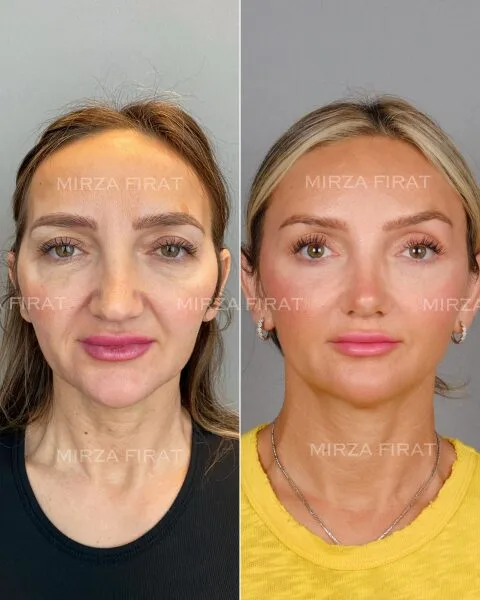
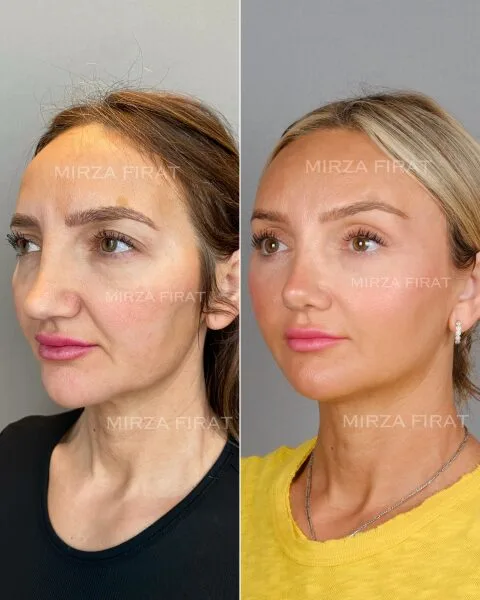
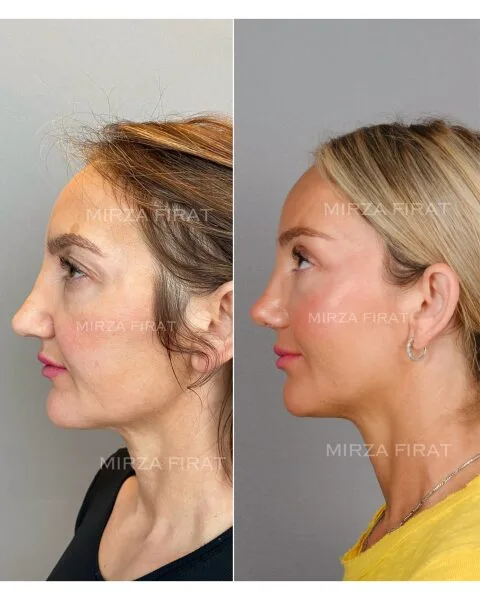
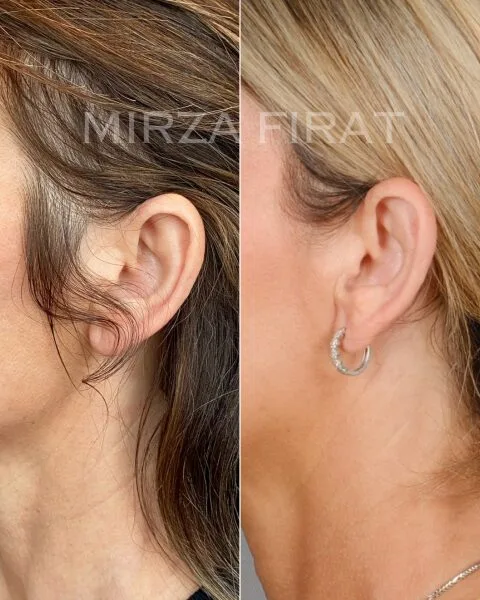
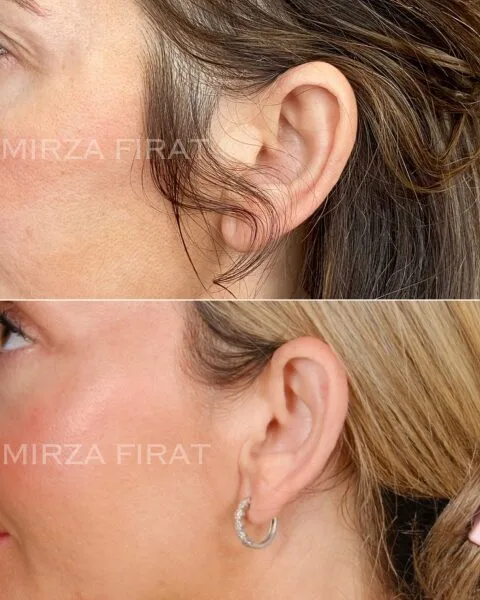
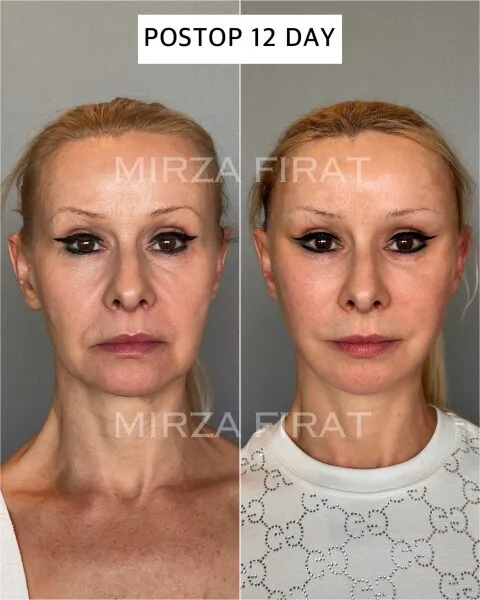
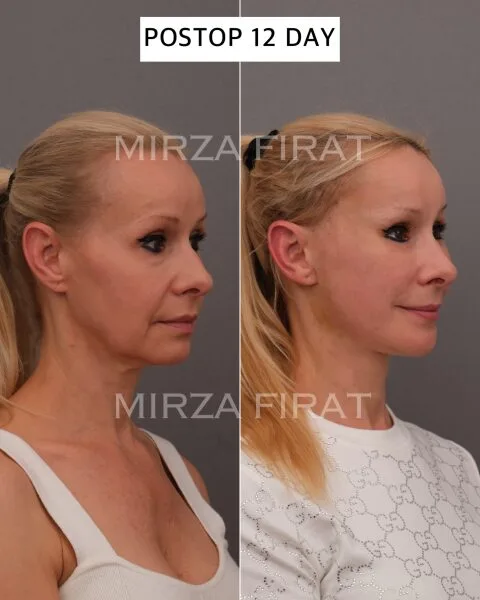
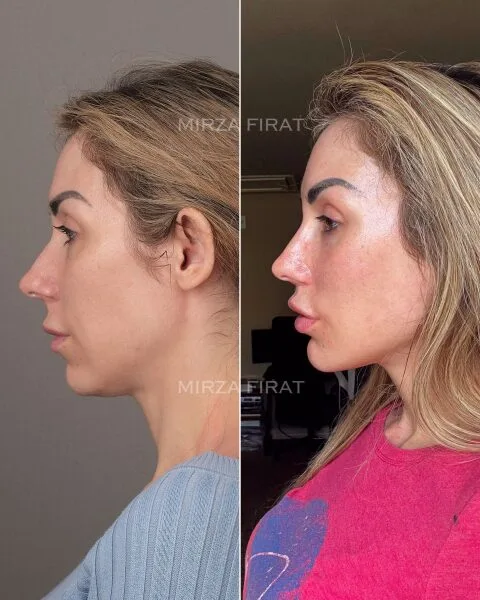
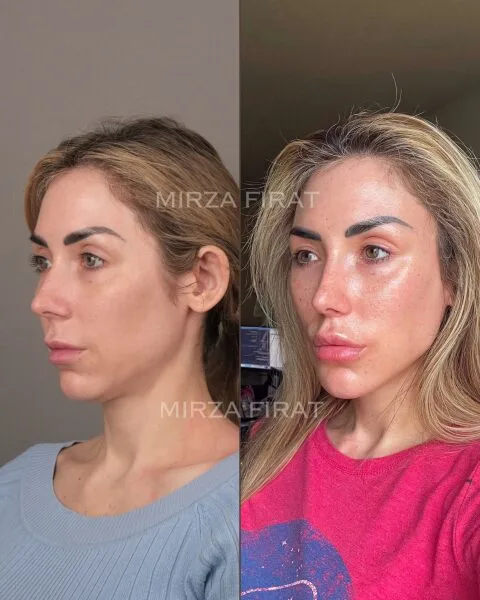
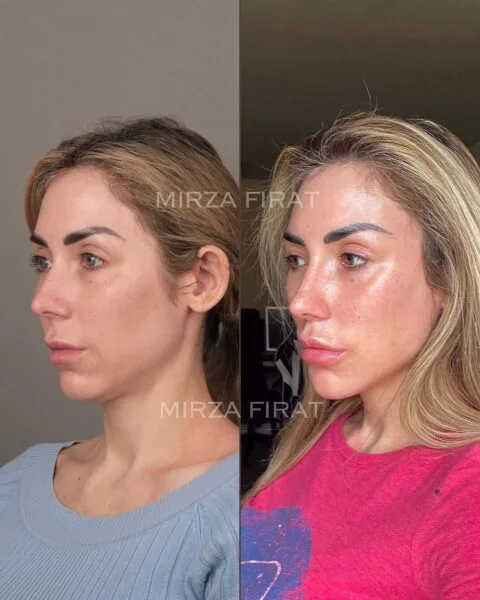
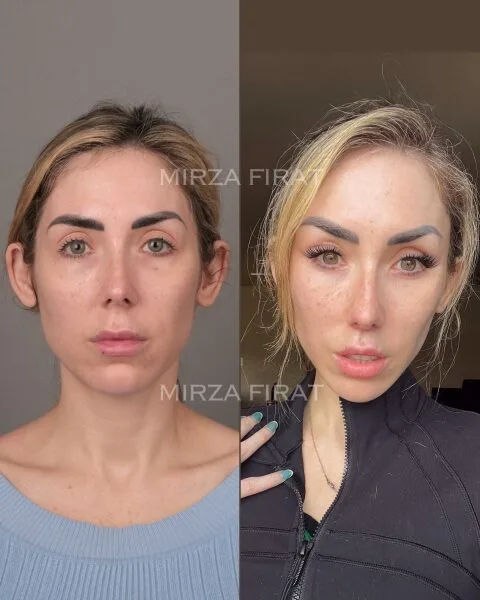
Ideal candidates often experience:
• Early jowls
• Loss of jawline definition
• Lower facial heaviness
• Marionette lines
• Sagging around the mouth
• Mild to moderate lower-face descent
• Early facial aging involving the jawline
Many patients seeking Type V are not yet ready for a full face and neck lift but want meaningful improvement of the lower face and jawline.
Jowls develop when deeper facial tissues gradually descend below the jawline.
As facial retaining ligaments weaken and the SMAS layer loses support, tissue begins to accumulate along the lower face, softening the jawline and creating heaviness around the mouth.
Type V addresses the structural cause of jowls rather than simply tightening the skin.
Yes.
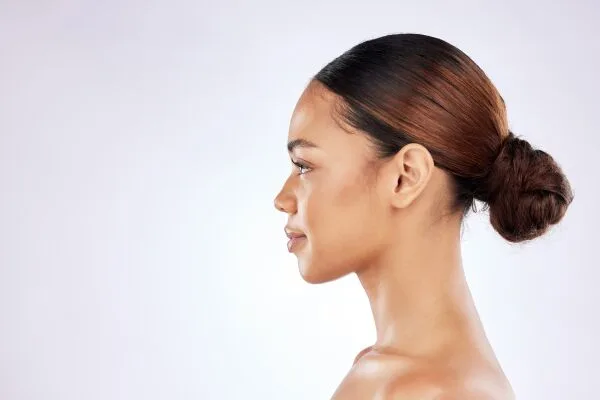
One of the primary goals of Type V is restoration of jawline definition.
By repositioning deeper facial tissues vertically, the procedure helps recreate a cleaner transition between the face and neck while reducing lower facial heaviness and improving facial contour.
Yes.
Marionette lines often become more visible as lower facial tissues descend.
By restoring support to the lower face and repositioning descended tissues, Type V may soften marionette lines and improve the contour of the lower face.
Yes.
Because Type V includes all of the rejuvenation performed in Type I, patients frequently experience improvement in the cheeks, midface, and nasolabial region in addition to the lower face and jawline.
However, the primary focus of Type V remains jawline definition, jowl correction, and lower-face rejuvenation.
Type V focuses on the jawline and lower face.
Type II extends rejuvenation into the neck.
Patients with significant neck laxity, platysmal banding, excess neck skin, or loss of neck definition often require Type II rather than Type V.
In simple terms:
Type V = Jawline + Lower Face
Type II = Full Face + Neck
Yes.
Type V incorporates deep-plane SMAS repositioning and retaining ligament release.
Rather than relying on skin tension, the procedure restores support through anatomical repositioning of the deeper facial structures responsible for facial aging.
Yes.
Small incisions are concealed within the hair-bearing temporal region, while an additional incision is hidden behind the ear within the postauricular crease.
These strategically concealed access points allow comprehensive facial rejuvenation while minimizing visible signs of surgery.
This is one of the most common questions patients ask.
Facial aging is primarily caused by tissue descent rather than excess skin alone.
During Type V surgery, deeper facial structures are repositioned back toward their original anatomical location. As facial support is restored, the skin naturally redrapes over the repositioned tissues.
When necessary, limited skin excision may be incorporated depending on anatomy and the degree of facial aging.
The goal is not to pull the skin tighter, but to restore the deeper facial foundation and allow the skin to adapt naturally.
No.
The goal is not to create a tighter face.
By repositioning deeper tissues vertically rather than relying on skin tension, Type V is designed to create natural-looking rejuvenation while preserving facial identity and expression.
No facelift can stop the natural aging process.
However, because Type V repositions deeper facial structures rather than temporarily masking aging, results are generally long-lasting and measured in years rather than months.
Patients continue to age naturally, but from a more youthful starting point.
Most patients experience temporary swelling, bruising, and tightness during the early recovery period.
Many patients feel socially presentable within approximately two to three weeks, although refinement continues as tissues settle and swelling resolves.
Recovery varies depending on anatomy and any accompanying procedures.
The goal is to restore jawline definition, eliminate early jowls, improve lower facial contour, and create a cleaner, more youthful facial outline while preserving natural expression and facial identity.
Type V is designed for patients who want meaningful lower-face rejuvenation through hidden incisions, deep-plane anatomical repositioning, and natural-looking long-term results.